Press review

Appel de candidatures
Conseil d’administration – Les Aidants du Haut-Saint-Laurent
Saint-Chrysostome, 1er octobre 2026,
Le conseil d’administration de Les Aidants du Haut-Saint-Laurent souhaite accueillir un(e) (1) nouvel·le administrateur·trice afin de compléter sa composition.
Si vous avez à cœur la proche aidance et désirez mettre votre expérience, votre jugement et vos idées au service de notre mission, nous vous invitons à soumettre votre candidature.
L’implication au sein du conseil d’administration représente environ 9 rencontres par année, d’une durée approximative de 2 à 3 heures chacune (les mercredis après-midi), auxquelles peut s’ajouter une participation occasionnelle à certains comités ou activités, selon vos intérêts et vos disponibilités.
Les personnes intéressées sont invitées à transmettre, au plus tard le jeudi 29 octobre, une lettre d’intention expliquant leur motivation à siéger au conseil d’administration, à l’adresse suivante : direction@aidantshsl.org ou au 23A, rang Ste-Anne, Saint-Chrysostome, Québec J0S 1R0.
Le conseil d’administration se réunira par la suite afin de procéder à la cooptation du ou de la nouvel·le administrateur·trice.
Profil recherché – Administrateur·trice (mandat de 1 an et demi)
Le mandat proposé est d’une durée de 1 an et demi et s’exerce dans le respect d’un code d’éthique et de confidentialité applicable à l’ensemble des membres du conseil d’administration.
Compétences et qualités recherchées
- Faire preuve de diligence, de rigueur et d’un sens des responsabilités.
- Avoir à cœur la mission de l’organisme et la réalité des proches aidants.
- Faire preuve de collaboration, d’ouverture et de respect dans les échanges.
- Être disponible pour les rencontres du CA et, au besoin, pour certaines activités ou comités.
- Être disposé·e à suivre une formation d’accueil ou de gouvernance, selon les besoins.
Compréhension des réalités de la proche aidance
Nous recherchons une personne ayant un regard sensible et éclairé sur les réalités des :
- Proches aidants d’aînés,
- Tout proches aidants (d’une personne ayant un handicap physique, intellectuel ou un trouble du spectre de l’autisme)
- Personnes post‑aidantes et endeuillées.
Nous remercions sincèrement toutes les personnes qui souhaiteront mettre leur expertise et leur engagement au service de notre communauté de proches aidants.
Au plaisir de vous lire !
Julie Paquette, directrice générale
Au nom des membres du conseil d’administration
Suzanne Richard, Présidente
Pamela Lacoste, Vice-présidente
Jean-Luc Payant, Trésorier
Hélène Rayle, Secrétaire
Jeannine Mendicino, Administratrice
Jeanne Levasseur, Administratrice
Opinion letter
Published in The Gleaner
We hear more and more about caregivers, but do we really know what a caregiver is? Here is a definition: "Any person who, continuously or occasionally, provides significant support to a member of their circle who has a temporary or permanent disability and with whom they share an emotional bond, whether familial or not."
Family caregivers are essential to maintaining the quality of life of their loved ones (medical support, assistance with meals, managing appointments, personal care, finances, emotional support, housekeeping, etc.). They are indispensable because of their kindness, the time they dedicate, and their concern for the well-being of their loved ones.
This year, from November 3rd to 10th, is National Carers Week. It's an opportunity to celebrate and support them.
Do you know any of them? Or are you one of them? Could you support them? In what ways?
– Employer, why not offer your employees flexible working hours so they can support their loved ones or allow caregivers to receive support themselves? Recognize that you can make a difference in the lives of employees who are caregivers.
– Family, why not take an extra moment to visit a loved one who is struggling or to support your primary caregiver?
– Friends, why not invite your friend who is a caregiver out for an outing, a chat, or a gentle walk?
Checking in on a caregiver shows concern for their quality of life. This person, who dedicates themselves wholeheartedly to someone with reduced autonomy or a disability, needs to be seen, heard, and able to express the challenges they face daily.
Let's not kid ourselves, the challenges faced by caregivers are numerous. These caregivers face the emotional burden of caring for their loved one, the delays in services, the constant trips to the hospital, and all the specific appointments: audiologist, dentist, and/or other specialists. They live with the constant worry of receiving a call at any moment, or even 30 calls a day from their loved one who is looking for something, worried, etc.
So, what will you do to help the caregivers in your life?
As a caregiver, what can you do to ensure your own well-being while caring for someone who is losing their independence or living with a disability?
Signed Esther Parenteau
The Gleaner Newspaper
November 30th, 2024 Edition
Article
Family caregivers also need help
According to the 2019 Canadian Child and Youth Health Survey (CCYS 2019), one in 50 Canadian children and youth aged one to seventeen had been diagnosed with autism spectrum disorder (ASD). In Quebec, the prevalence of ASD for this same age group was 1.2% to 2.2%. Parents, grandparents, siblings, and friends supporting one or more children living with a temporary or permanent disability are among the 1,500,000 caregivers in Quebec.
During Autism Awareness Month, it is important to highlight the sustained involvement of those close to individuals with ASD. These caregivers (parents, grandparents, siblings, friends, etc.) often struggle to see themselves as such. They take on responsibilities, frequently without fully realizing all the tasks they perform, and they do so by normalizing their involvement with the person with ASD.
Being a caregiver for someone with ASD means investing more intensely in a variety of areas (education, rehabilitation, stimulation, transportation, assistance with hygiene, feeding, etc.). It is important to emphasize that, according to the 2019 ECSE, children and youth with ASD were three times more likely than those without ASD to have another long-term health condition, including “asthma, diabetes, epilepsy, an anxiety disorder (such as a phobia, obsessive-compulsive disorder, or panic disorder), a mood disorder (such as depression, bipolar disorder, mania, or dysthymia), an eating disorder (such as anorexia nervosa or bulimia), a learning disability or difficulty, attention deficit hyperactivity disorder (ADHD), fetal alcohol spectrum disorder, and any other condition.” All of these conditions significantly increase the responsibilities of the caregiver toward the individual with ASD.
In many cases, the caregiver must fulfill this role for an extended period. The involvement of caregivers becomes very demanding and energy-draining. This can lead to exhaustion, isolation for the caregiver, and even profound psychological distress. It is therefore essential that caregivers receive support in their role. The organization Les Aidants du Haut-Saint-Laurent is there to offer services that allow caregivers to find assistance and comfort. For more information on the services offered, you can contact a representative at the organization.
The Gleaner Newspaper
April 3rd, 2024 edition
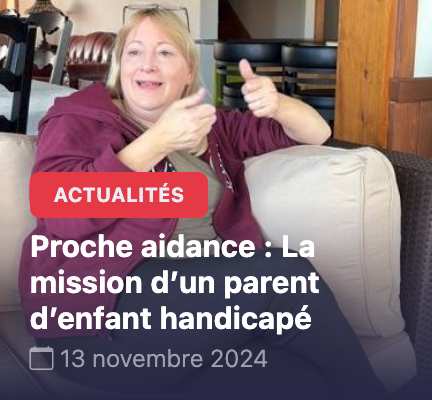
Testimony
Informal caregiving – A daily mission
We are in the Journal le Saint-François in the edition of Wednesday, November 13, 2024. Here is a beautiful testimony from a caregiver, Anne-Renée, mother of a physically and intellectually disabled teenager.
Thank you Anne-Renée for your valuable contribution!

Enrichment, personal growth, and discovery are the words that come to mind when I think about the summer I spent with Les Aidants du Haut-Saint-Laurent. From my very first day with my new team, I felt welcomed and valued. Over my eight weeks there, I forged incredible bonds with my colleagues, as well as with the caregivers and those they cared for.
I had the opportunity to meet some of the caregivers through informal coffee gatherings, our wellness activities, and support calls. Their dedication and resilience deeply moved me. Several caregivers shared their experiences of the support they received from our organization, which made me realize the impact that listening, guidance, and support can have on a caregiver's life. While our team provides assistance to caregivers, I also came to understand that this work goes far beyond that. The caregivers I met showed me a new side of caregiving: selflessness, constant self-improvement, and resilience.
I also had the opportunity to learn more about the daily lives of those receiving care through my role as a respite care facilitator. The individuals I cared for, despite facing cognitive and/or degenerative diseases, always welcomed me into their homes with open arms and smiles. I am convinced that the various activities, conversations, and wonderful moments I shared with them during my visits made a real difference in their lives.
Finally, I had the privilege of organizing four wellness activities for the community. In preparing these activities, I had the opportunity to meet many people from the region. Business owners, residents, colleagues, and wellness professionals all contributed in their own way to the success of these events. The Haut-Saint-Laurent community is close-knit and unique. In short, I thank everyone I met during my time at the Haut-Saint-Laurent Caregivers organization; my passion for helping others has only grown stronger.
- Maude Tremblay
Summer employee studying social work
________